
Practical support to rebuild confidence, independence and everyday life after a transport accident.
A transport accident can change life in ways that aren't always visible. Recovery is about rebuilding the confidence to return home safely, reconnect with your community, get back to work and participate in the parts of life that matter most.
At Four Point Therapy, our experienced Occupational Therapists work alongside people recovering from transport-related injuries to understand what has changed, identify meaningful goals and develop practical strategies that support long-term recovery. Whether you're rebuilding daily routines, trialling equipment, planning home modifications, returning to work or working towards greater independence, therapy is tailored to you — collaborative, evidence-informed and focused on meaningful improvements that continue well beyond individual sessions.
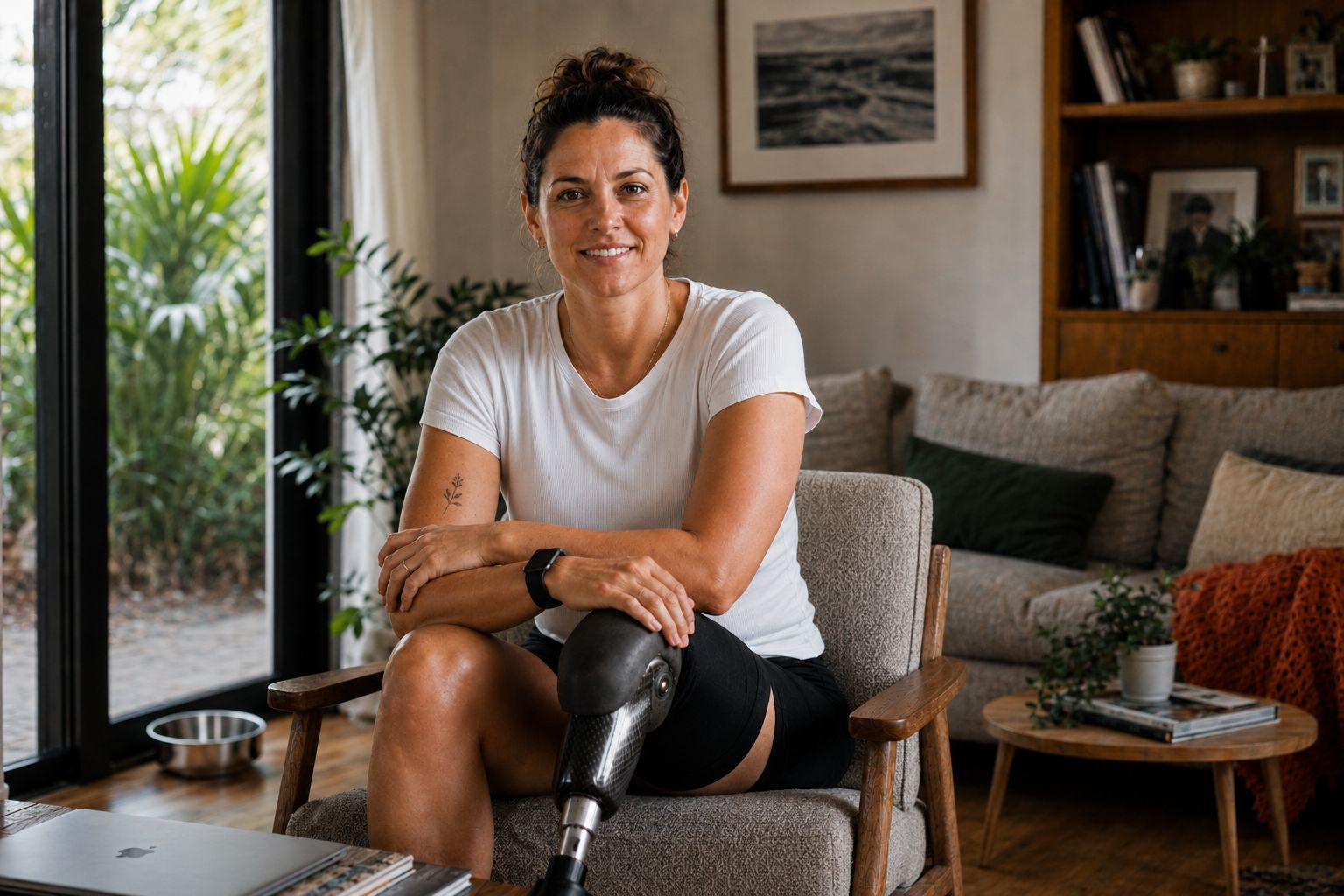
A more thoughtful approach to TAC Occupational Therapy.
Recovery isn't measured by the number of appointments someone attends — it's measured by the moments that matter. Walking safely through your front door. Preparing your own meals again. Returning to work. Driving independently. Our philosophy is centred around therapy that is meaningful, practical and individualised — every recommendation has a purpose, every assessment informs a plan, and every session contributes towards clearly defined goals.
Supporting recovery that fits your life.
Recovering after a transport accident rarely follows a straight path. Some people need support immediately after hospital discharge; others are working towards returning to work months later. Whatever your recovery looks like, our Occupational Therapists provide practical, personalised support that adapts alongside your goals — delivered where it makes the biggest difference.
What is TAC Occupational Therapy?
Occupational Therapy supports people to participate safely, confidently and independently in the activities that make up everyday life. After a transport accident, an Occupational Therapist works alongside the client to understand the challenges and develop practical solutions — assessing how everyday activities are completed, identifying barriers in the environment, recommending equipment, building skills and coordinating supports that promote greater independence. Rather than focusing solely on symptoms, we look at how challenges affect the person's ability to participate in the life they want to live.
The supports we provide.
Every Participant's goals, circumstances and priorities are different. Our Therapists take the time to understand what's important to them, delivering support that's practical, evidence-based and tailored to their individual needs.
Occupational Therapy Intervention
- Personal care & self-care activities
- Household tasks & daily routines
- Fatigue & pain management strategies
- Cognitive strategies for memory, planning & organisation
Functional Assessment
- Home-based functional capacity assessments
- Baseline & outcome measurement
- Reports to guide recovery planning
Review of Capability
- Functional review across recovery stages
- Reporting for TAC review points
- Recommendations for ongoing supports
Assistive Technology
- Simple through to complex AT prescription
- Trials & reasoning reports
- Liaison with suppliers and TAC
Equipment Prescription
- Mobility & transfer equipment
- Wheelchair & seating prescription
- Pressure care & bathroom equipment
Home Safety & Accessibility
- Home safety & access assessments
- Falls prevention strategies
- Environmental risk review
Home Modifications
- Minor through to complex modifications
- Reporting & scope documents
- Builder & TAC coordination
Vehicle Access & Driving
- Return-to-driving planning
- Referral for on-road assessments
- Vehicle modification recommendations
Return To Work
- Worksite assessments
- Graded return-to-work planning
- Employer & treating team liaison
Community Participation
- Rebuilding community routines
- Confidence in transport & travel
- Meaningful leisure & social re-engagement
Family, Carer & Support Worker Education
- Practical strategies for daily support
- Handover of therapy programs
- Family, carer & support worker coaching
Long-term Independence
- Sustainable routines that support ongoing recovery
- Skill building & capacity development
- Environmental modifications for lasting change
A closer look at who we work with.
Injuries don't tell the full story. Our focus is on how each person functions in their day-to-day life — and what support will make a meaningful difference to their recovery.
Physical injuries
- Orthopaedic trauma
- Musculoskeletal injuries
- Fractures
- Reduced mobility
- Persistent pain
- Complex physical rehabilitation
Neurological injuries
- Acquired Brain Injury
- Spinal Cord Injury
- Neurological impairment
- Reduced coordination
- Balance difficulties
- Changes in motor function
Cognitive changes
- Memory difficulties
- Reduced concentration
- Planning & organisation challenges
- Executive functioning difficulties
- Decision making
- Fatigue affecting cognitive performance
Reduced independence
- Personal care
- Showering & dressing
- Meal preparation
- Household management
- Shopping
- Community access
Return to work
- Building work capacity
- Workplace assessments
- Fatigue management
- Functional task analysis
- Graduated return to work
Complex rehabilitation
- Multiple injuries
- Equipment requirements
- Home modification needs
- Attendant care
- Long-term rehabilitation planning
What We Help People Work Towards
After a transport accident, Occupational Therapy focuses on the parts of daily life that recovery needs to reach — home, work, driving, routines and community. It's less about a room in a clinic, and more about the environments people actually live in.
A considered approach to TAC recovery.
Experienced TAC clinicians
Occupational Therapists who are experienced supporting people recovering from transport accidents — from early rehabilitation through to return to everyday life.
Practical, real-world therapy
Support delivered in homes, workplaces and community settings — where progress actually matters and translates into daily life.
Goal-focused recovery
Therapy guided by meaningful outcomes rather than simply more appointments — measurable, purposeful and paced to each person.
Collaborative communication
Working closely with clients, families, Case Managers and treating teams — with reliable reporting throughout recovery.
How we think about TAC recovery.
Meaningful outcomes
We focus on measurable improvements that help people participate more independently in everyday life — not therapy for its own sake.
The whole person
Recovery isn't only physical. We consider routines, confidence, environment, family and goals — the full picture of what makes recovery stick.
Building independence
Therapy should increase independence, not create unnecessary reliance. We build capacity, teach strategies and step back as people progress.
Working together
Strong, timely communication with Case Managers, treating teams and families — so recovery stays joined-up and consistent across providers.
A whole-person view of recovery.
Recovery after a transport accident is rarely just about physical healing. Pain, fatigue, cognition, confidence, family circumstances, work demands and environmental barriers can all shape how someone functions day to day. We consider how these factors interact — not in isolation — so recommendations are realistic, relevant and tailored to everyday life.
Recovery is more than an outcome. It's a return to the things that matter.
Every recovery looks a little different. For some, it's stepping back into work. For others, it's a safer home, a return to driving, or the confidence to be out in the community again. Whatever the picture, we help build the practical steps to get there.
The difference clients and Case Managers notice.
Choosing an OT provider is about more than availability. It's about finding a team that understands the complexity of recovery after a transport accident, communicates proactively and genuinely partners with clients throughout their rehabilitation.
Experienced Occupational Therapists
Clinicians experienced across orthopaedic, musculoskeletal, neurological and complex rehabilitation — recommendations grounded in clinical reasoning and evidence-based practice.
Thoughtful Therapist matching
We consider experience, goals, injury presentation, communication style, service location and complexity — not simply the next clinician on a roster.
Therapy built around real life
Delivered in homes, workplaces, community, our Fitzroy clinic or via Telehealth — so recommendations feel practical and immediately applicable.
Responsive support end-to-end
Timely acknowledgement of referrals, clear communication, efficient coordination and professional reporting — great service beyond the therapy session.
Collaborative care
Proactive communication with clients, families, Case Managers, GPs, specialists and rehab providers to keep planning coordinated and consistent.
Ethical, evidence-informed recommendations
No unnecessary intervention. Every recommendation for therapy, equipment, AT or modifications is clinically justified and aligned with the client's goals.
Answers to the questions we hear most.
Straightforward, responsive and easy to navigate.
Whether you're a TAC Case Manager, hospital, rehab provider, medical practitioner, family member or someone referring yourself, our team will guide you through the next steps — with an acknowledgement target of three business days for new TAC referrals.
- STEP 01
Submit your referral
Complete our TAC referral form on our website or contact our team directly. If contacting our Intake team providing the TAC claim number, reason for referral, goals, location and any relevant approvals helps us review it more efficiently. We will respond within 1-2 business days.
- STEP 02
We review the referral
Our Intake team reviews the client’s presentation, circumstances, clinical requirements, location and service needs — and liaises with the referrer if additional information is required.
- STEP 03
We match the right Therapist
Rather than allocating referrals randomly, we carefully match each client with the Occupational Therapist whose experience, location and clinical strengths best align with their goals.
- STEP 04
Therapy begins
Our Therapist contacts the client to introduce Four Point Therapy, answer any questions and arrange the first appointment. From there the therapy journey begins!
Referring is about confidence.
Confidence that referrals will be acknowledged promptly. That communication will stay proactive. That recommendations will be clinically justified and centred on meaningful outcomes. We value strong working relationships with TAC Case Managers, hospitals, rehab providers, GPs and the broader treating team.